DuSable Museum reenacts 5oth Anniversary of March On Washington
For those unable to attend Wednesday’s 50th anniversary of the 1963 March on Washington, The DuSable Museum of African American History held a reenactment of this iconic event Saturday where hundreds heard Civil Rights leaders like Attorney Thomas N. Todd, Father Michael L. Pfleger and 9-year-old Zyon Nichols who recited Dr. Martin Luther King, Jr.’s famous “I Have a Dream†speech by memory.
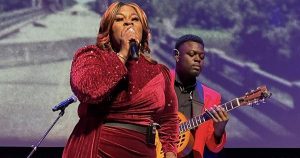
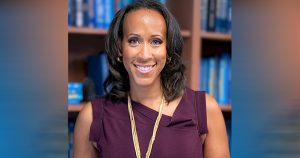
For two-hours, hundreds braved the burning rays of the sun in Washington Park, outside of the Museum headed by Dr. Carol Adams. A string of elected and appointed officials like Governor Pat Quinn, Mayor Rahm Emanuel and activists Mamie Pratt from the Coalition of Black Trade Unionists, Attorney Lewis Myers, Rev. Al Sampson, Rev. Janette Wilson from Rainbow PUSH, Andrea Zopp from the Chicago Urban League, Rev. Jedidiah Brown, Young Leaders Alliance, Dr. Chandra Gill, Black academically Speaking, Father David Jones, St. Benedict the African, KAM Isaiah Israel Rabbi Frederick Reeves spoke of Dr. King’s dream and 12-year-old Mae Ya Carter Ryan who sings like Mahalia Jackson with TV personality Richard Steele as the Masters of Ceremonies.
And, John Umphlett, manager of the Customer Services Operation for the Chicago District, U.S. Postal Service unveiled the commemorative “March On Washington†postage stamp.
Gov. Quinn said Dr. King’s speech he made 50-years ago will live on forever. When Dr. King lived in Chicago, Quinn said his physician, Dr. Quentin Young, was Dr. King’s doctor. “Dr. King said one of the worse forms of discrimination was in health care…. Health care wasn’t a privilege. It was a fundamental right,†said Quinn.
He announced in a few months the state of Illinois will be implementing the Affordable Care Act. Dr. King understood how important health care was to all of us. Quinn thanked President Obama for “remembering what Dr. King said that day that we have to live out our creed, live out our Constitution, and make sure everybody is in and nobody is left out,†said Quinn.
And in the spirit of the women of the Civil Rights movement, Dr. Adams honored several women who “have been very actively engaged in fighting for freedom right here in Chicago†including Rev. Attorney Janette Wilson, Brenetta Howell Barrett, a 1963 fighter for freedom, Ayesha Jaco with the Lupe Fiasco Foundation and Diane Latiker with Kids Off the Block who was not present, but those who were present spoke without mincing their words.
“We are in an era of Smartphones, Ipads, Androids and all the technology replacing in many instances the hard work that we had to do by hand,†said Attorney Todd.“No matter how smart your Smartphone is or no matter how sophisticated your computer is, no matter how much technology you have, you still can’t download freedom. “There’s no app for that.â€Â  “If would be free, you must become free the old fashion way. You have to work and work for it.”
In challenging the black community to come back home, Todd told the crowd, “We have resources. We have the man power and the woman power, and we have the talent, but it’s been working for somebody else.â€
Referring to poet/writer Langston Hughes, Todd said, “We have become frosting on somebody else’s cake.†In challenging the black church he called the “most powerful institution†in the black community “to come home, get off their knees…and stand up and deal with the hell that’s here today.â€
To the black lawyers, teachers, educators, doctors and other professionals, Todd told them, “You need to come home. Sometimes they are more concerned about their 401-K than they are about the new KKK.â€
To the black preachers he said, “We can’t do it without you. We need the preachers because that is our natural leadership, but what we need are protesting preachers, not payroll preachers,†said Todd. He said 50 years later, “Freedom is still not free. Equal is still not equality. Fairness is still not equal, but we can meet these challenges and do what we have to do.â€
Looking out over the crowd, Father Pfleger referred to Dr. Eugene Carson Blake who was the first white clergy to be arrested in the Civil Rights movement and who spoke after A. Phillip Randolph at the March on Washington. “He said he wish he could be speaking forall the people of faith. At least he could have been the voice for them and stood up for them, but he said he couldn’t do that because the people of faith were so disunited and so divided.
“He said he couldn’t do that because the people of faith were not ready to stand upand march and fight for freedom,†said Pfleger. “He said the people of faith said all of the right things, but they didn’t do the right things. They were not ready to act. They were not able to put their own house in order when it came to desegregation…..
“Fifty-years later, I wonder if things are not just as bad or perhaps even worse than they were 50-years ago,†Pfleger said. “The church, the foundation what Dr. King stood on and fought for…has become part of the problem. The faith community has too often become part of the institution and when they are not joining the institution they’re too silent to challenge the institution.
“If we are to move forward to freedom, the church has to clear its throat. The church has to redeem its prophetic voice and take the lead rather than the caboose of this society…. We must do more than invocations and benedictions. We must be the conscious of a society that seemingly has lost its conscious,†bellowed Pfleger.
“We must be the lobbyist for the poor, the lobbyist for the disenfranchised. We must ask the questions nobody wants to ask anymore, and the faith community has to once again be the moral voice in an immoral world,†said Pfleger.
“We must do as Dr. King said. We can past laws to make lynching and inequality illegal, but only a faith community can change a heart but we can’t change anybody’s heart until we have the heart of the God we say we represent. It’s time for us to change our hearts. We have to be the ones to make the rough smooth, the crooked straight, the valley filled in and the mountains kept out….â€
Referring to the Sunday prayer in churches, Pfleger recited, “Thy Kingdom come. Thy will be done on earth as it is in heaven. Well, it’s time to stop just praying it. It’s time to start doing it. It’s time to not just remember Dr. King. The greatest injustice we could do to Dr. King is to just remember him. Be like him and let’s be the voice again of justice.â€
Standing in the footprints of Rep. John Lewis (D-GA) who was beaten on the Edmund Pettus Bridge during the March 7, 1965 “Bloody Sunday†by law enforcement officials, Rev. Brown said 50-years ago Lewis represented the student activist non-violent part of the march.
In quoting Lewis, Rev. Brown said, “We want our freedom and we want it now. Fifth-years later, are we free? Are we free when the Voting Rights Act has been crippled? Are we free when we see schools closing in our neighborhoods and we have no say so. Are we free when we are afraid to let our children be children because they are slain in their own community?
“John Lewis said we will not wait for the course to act for we have waited hundreds of years. Well, I say we waited 50 more. Dr. King made it clear. Nobody else can do this for us. Nobody’s document can do this for us. No Civil Rights bill can do this for us. If we are truly going to be free, we must move down into the inner resources of our own soul and…†come up with our own emancipation proclamation.
“We cannot address black excellence or black power until we can again say it loudand declare and mean it, I am black and proud. My black is beautiful. We need to sign ourselves over to freedom. The Emancipation Proclamation was signed over 100 years ago. Today is our turn,†said Brown.
Referring to the media portrayal of African Americans, Rev. Brown said, “Still today we are portrayed as lazy and aggressive, suspicious, or suspect. We are still portrayed as poor and conscious animals and the biggest lie†he has heard ]]s that “the black man is hopeless because hopeless and chosen don’t mix. Through racism, through slavery, through prejudice, through stereotype, through disenfranchisement and unlevel playing fields, God didn’t bring us this far to leave us now,†said Brown.
Saying we are all Trayvon Martin’s, Rev. Brown said while the souls of blacks need cleansing America’s souls also need cleansing, too. Brown urged blacks to unify and said of the presidency, “Black men are great. It’s not enough to have one black president, but let’s elect a president so black that it’ll make every racists scream every time they wake up in America….â€
Brown called on blacks to stop spending its $1 trillion in other communities and to support each other. “We want our freedom and we want it now.â€
Rabbi Reeves said, “As Americans, we are a people of hope. We are not dismayed by the racism that remains after these 50 years. We recognize there is still a long way to go on the road to the mountain, but we know that we will continue to walk on that road with occasionally steps backward but continual steps forward because of the hope that energizes our path….â€
Saying Americans are strong “because of and not in spite of but because of the differences that we embrace and bring together,†Reeves said. “American culture is the expression of all of these cultures together growing with one another, influencing one another, sharing the hope of freedom that comes from justice.
“This hope that we all share that speedily and in our own day we will come to know an America that is not divided in opportunity, not divided in education, not divided in justice but rather as united in freedom. We might not finish the work, but we are not free to give up working for the day when we all know that we are one,†Rabbi Reeves said.
Chinta Strausberg is a Journalist of more than 33-years, a former political reporter and a current PCC Network talk show host. You can e-mail Strausberg at: Chintabernie@aol.com.Â