Pre-Conceived Bias Against Black Students?
Does our District PBIS Initiative engage pre-conceived bias interrupting success for Black students?
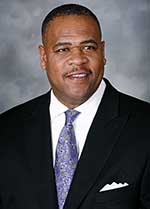
By Dr. Edwin Lou Javius
CEO/President, EDEquity
Nationwide (BlackNews.com) — I have had the pleasure of engaging hundreds of courageous educators across the nation in developing systems and strategies to increase leadership and teacher efficacy. Recently American schools have encountered another “black-eye”; no pun intended. The National Association of Educational Progress ( NAEP ) has reported that our schools, at various grade levels, have actually widened the gap between students of color and their white counter parts. In addition to the NAEP data, other non educational agencies are reporting disproportionate data of Black and Brown students being expelled, suspended and referred to Special Education.
In an effort to combat the number of Black students being referred to Special Education, the nation has implemented a Response to Intervention (RtI) model. One of the goals of the implementation of the RtI model was to strategically examine the root causes of why Black students are referred more often to Special Education. The model was implemented to have the school system view students with possible learning disabilities with an asset-based lens. In short, the model was to analyze academic and behavioral causes to students’ lack of success in school.
As nationally conveyed the model is designed to put in place specific assessment “safety-nets,” and educators whom will critically examine multiple data sources prior to placing the student at different tiers of support. Tier I support calls for differentiated core instruction, and should be provided by the general education teacher. Tier II support provides additional academic and behavioral support, without taking away the basic differentiated core instruction. In Tier III, the student is provided intense individualized, research-based intervention strategies that are based on data points provided from progress monitoring. This instruction is in addition to the regular curriculum; and students may be grouped or taught differently for a portion of the day.
The fire that spurred me to write this article is a desire to have us seriously reflect and act on our leadership decisions that may explain why Black students continue to be disproportionately referred, diagnosed and remain in our Special Education “program”. I would like to offer my personal analysis and a reflection that might shed some light on changing the educational experiences for Black students and offer a solution to educators whom look to implement a National Model (RtI) that is culturally/ racially/ linguistically responsive to Black students.
As a lead consultant for high performing and turn-around schools across the nation, I have surprisingly collected data from a number of districts and schools implementing the Positive Behavior Intervention Support Model (PBIS) to address students and assist teachers with strategies to address student behavior. Despite the fact that the national RtI model clearly indicates that student referrals to Special Education should diagnose and address the learning disabilities of students, many RtI structures unfortunately, focus their attention on the behavior of the student as the cause of academic underachievement. This drives the student study team members to devote 80% of their efforts on addressing behavior and only 20% of their examination on instructional issues. The root causes of most black boys’ behavioral struggles stems from un-related curriculum and instructional delivery that does not appropriately engage the students’ multiple literacies; academic, social, cultural and racial (Tatum, 2006). Teachers strongly indicate in conferences and training sessions that, “There is no way for me to teach if I have behavior problems.” While I emphatically concur with the teachers, I do go on and ask, “What comes first, a powerful well designed lesson or a motivated student?” Needless to say, the intellectual air becomes quiet and personal reflection begins. I then remind them that when they arrived at my training not all of them were motivated either. Their level of motivation and excitement was based on my ability to engage them with the content and delivery. Teachers want the same type of classroom experiences as black boys; enthusiastic teachers, relevant curriculum, the opportunity to share their knowledge with their peers, affirmation from their responses, opportunity to move in the class, and rationale of why the information is important.
Pre-conceived Bias Interrupting Success for Black Students (PBIS)
In further examination of strategies districts use to modify behavior of black boys, I have realized that if I were an elementary student, I would be a serious candidate for Special Education services. Not many of the district programs and strategies have explicit modifications for a young squirrely black boy from the projects who loved school. The way I entered school and the cultural attributes I carried would not have been viewed as academic or cognitive assets. As Lisa Delpit indicates, there is a cultural in-congruency with the norms of my home culture and school culture.
As I have witnessed in many special education audits and behavior specialist meetings, many if not most educators do not consider the impact of a school culture that is traditionally a Eurocentric, middle class school experience for all students. This lack of recognition by most educators, and the impact on certain students, has created an underlying bias concerning the behavior for black boys in school. Norms of behavior are key to school success, however educators must be willing to acknowledge that some school norms are hidden (Payne) and certain students are never given the treasure map. Subsequently, many black boys engage the pyramid of support of RtI through the behavior door with little consideration that movement, divergent thinking, verbal prowess, being argumentative, and learning exuberantly are the key learning skills of Gifted and Talented Learners.
Chicken or Egg?
As indicated earlier, teachers should consider which comes first; a powerful lesson or a motivated student. Often, districts and schools tend not to have a clear and explicit approach to improving the basic differentiated core Tier I instruction. The evidence shows discipline and behavior declines when students are engaged in ineffective class activities and lessons. Noteworthy, is the fact that more evidence is showing students of color are more engaged when lesson are differentiated to meet their cultural and linguistic needs (Thomlinson, 2010). Alfred Tatum, among other scholars, shares the importance of providing culturally relevant materials to address the behavioral needs of students of colors – particularly black boys.
District Considerations
As Ron Edmonds indicated in effective schools, “we really know what to do to solve the issue of the under-achievement of black boys. We have to be dissatisfied with why we have not done what we know works?” District and schools that have recognized the brilliance and cultivated above average academic success in black boys have the following: Teachers that believe in the talents of black boys and students who overtly know that the teacher believes in them; teachers who use what she/he knows about the student after 3:00 pm and uses that information to design relevant lessons to enhance the skill level of the students; teachers who have pedagogical content knowledge (a deep understanding of the content and is a student of knowing students); teachers who validate and affirm the home language and cultural norms and supports “code switching”; teachers who refine their district’s RtI model to overtly address Tier I instruction; teachers who provide learning experiences that allow black boys to show a depth and sophistication of their thinking, and are provided with positive descriptive feedback for their efforts; and last but not least, teachers who provide a racially and culturally safe classroom in which the students do not feel their race is on trial.
I urge educators to critically examine what really causes us to misdiagnose black students! If you open the academic door first and address the mediocrity of instruction, you will find statistically significant improvement in discipline and a decline in unnecessary referrals to Special Education.
I challenge you to use the following as a quick examination of your RtI model for addressing the needs of black boys. I support districts and schools in the implementation of a culturally responsive RtI model and eliminate pre-conceived bias interrupting success for black boys.
I welcome your feedback or reflection. Please feel free to e-mail me at javius@edequity.com or visit our web site: www.edequity.com
Dr. Edwin Lou Javius, a leading Educational Equity expert, has designed an instructional and leadership framework to improve instructional practice. As the Founder/President/CEO of EDEquity Inc., Dr. Javius has written several articles on the topics of closing the opportunity and race conscious leadership.